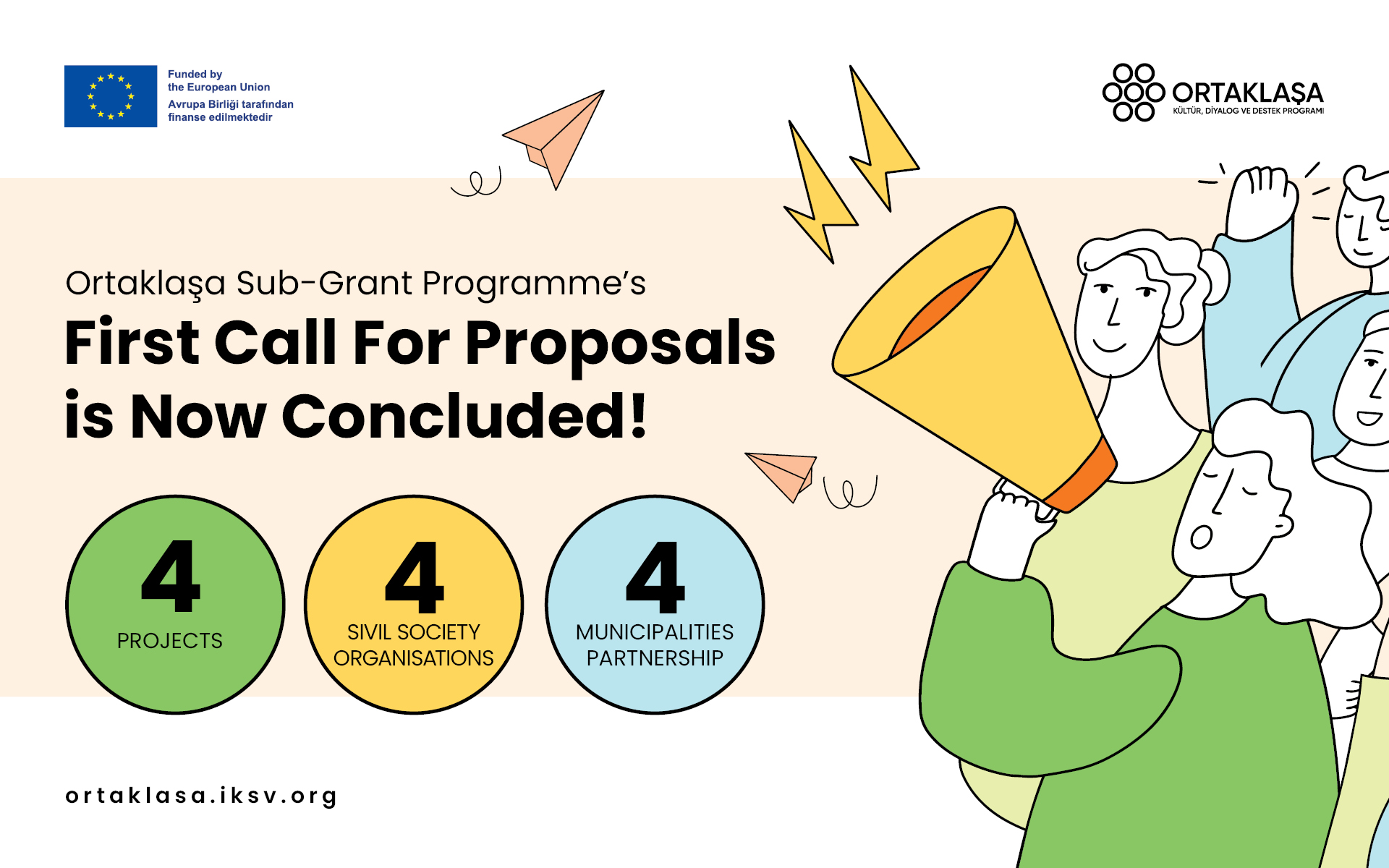
Applications for the Ortaklaşa Sub-Grant Programme Call for Proposals I, which aims to strengthen dialogue and equitable cultural cooperation between civil society organisations working in the field of arts and culture in Türkiye and municipalities, were accepted between 17 March and 18 May 2026. Up to EUR 500,000 in grant support has been awarded to projects that aim to develop local cultural policies through participatory approaches, support cultural and artistic production, and strengthen civil society’s participation in decision-making processes.
Projects
A Cinema in Ayvalık
Project owner: Seyir Arts and Culture Association, Ayvalık
Project partner Ayvalık Belediyesi, Balıkesir
With the support of Ortaklaşa, Vural Cinema will become a vibrant public cultural venue shaped collaboratively by civil society and local government.
The project will renovate the cinema’s physical and technical infrastructure and establish a shared operating model that will enable the venue to host municipal activities during the day and film screenings, children’s activities, talks and special programmes in the evenings and at weekends.
Following the renovation of Vural Cinema, professional training will be provided for the technical team. The cinema will reopen under its new model in February 2027. It will host free weekly children’s film screenings and workshops, European film screenings and talks, as well as special programmes focusing on women directors and gastronomy. It will also host events linked to festivals in Ayvalık and develop collaborative programmes with independent arts, culture and film communities across the Aegean Region and Türkiye.
A Courtyard Between Languages: Mazxana
Project owner: Diyarbakır Literature, Culture, Arts, Education and Research Association
Project partner: Diyarbakır Metropolitan Municipality
Project associates: Diyarbakır Sur Municipality, Aras Publishing, Women’s Culture, Arts and Literature Association (KASED)
Diyarbakır’s multilingual and multicultural heritage of coexistence will be brought into dialogue with the present through contemporary arts and cultural production, as well as new collaborations.
The 2026–2027 edition of Diyarbakır Comparative Literature Days (DKEG) will evolve into a year-round participatory programme centred on literature, translation, memory and coexistence. A historic Diyarbakır house in Sur will be transformed into Mazxana, a permanent cultural venue open to interdisciplinary production.
The transformation of the venue and programme preparations will take place between September 2026 and April 2027. A programming committee bringing together Diyarbakır Literature, Culture, Arts, Education and Research Association, Diyarbakır Metropolitan, and independent advisors will meet regularly throughout the year. The programme will bring together local, national and international participants and host at least 65 guests from Europe, Iraq, Iran, Syria and cities across Türkiye. Alongside monthly arts and cultural programmes, workshops will explore biographical storytelling through short films and graphic biographies.The resulting works will be presented at the closing programme on 15 May, followed by a two-week exhibition at Mazxana.
Gürpınar Cultural Participation Network
Project owner: Ninova Education, Culture, Arts and Tourism Association, Van
Project partner: Gürpınar Municipality, Van
Gürpınar Cultural Centre will be revitalised as a cultural centre that supports local residents’ access to arts and culture and their participation in cultural production in Van.
The project will develop a local cultural model that enables children, young people, women, older people and people with disabilities to participate more actively in cultural life. Through the Cultural Advisory Board and the Local Cultural Ambassadors Network, local residents will take a direct role in cultural planning, while arts education, mobile cultural gatherings, arts workshops and oral history activities will enrich Gürpınar’s cultural life and local memory.
A local needs assessment will be conducted to identify barriers to accessing arts and culture in Gürpınar. The municipally owned Gürpınar Cultural Centre will be improved in terms of accessibility, technical infrastructure and inclusive use. A Cultural Advisory Board and Local Cultural Ambassadors Network will be established to support the participatory management of the centre, while its programme of events will be developed together with local residents through planning workshops. Activities will include a Children and Youth Arts and Culture Academy, an arts workshop programme for women, mobile cultural gatherings in neighbourhoods and intergenerational oral history projects.
Romangal Participatory Governance Project: From Industrial Heritage to a Shared Future
Project owner: Ankara Aks Association
Project partner: Osmangazi Municipality, Bursa
Project associates: Osmangazi Cultural Enterprises; Bağ Women’s Initiative Production and Business Cooperative
The historic Romangal Silk Factory in Bursa will be transformed into a new cultural centre that preserves its industrial heritage and enables different stakeholders to have a shared voice.
Local residents, former factory workers, craftspeople, artists and young people will contribute to preserving the industrial heritage of the Romangal Silk Factory and the memory of Bursa’s silk-making tradition. The venue’s cultural programme will be designed together with these different stakeholders, while a permanent governance structure will be established in which the municipality, civil society and users all have a voice.
Stakeholder mapping, needs assessment, oral history and experience-sharing activities will inform the transformation of the Romangal Silk Factory. Workshops, focus group meetings and public forums will enable the future of the venue to be shaped collectively. Craft workshops will support the preservation and transmission of silk-making heritage, while a digital memory archive, an exhibition and a podcast series will be produced. Training programmes will strengthen the capacities of local government and civil society. To ensure the long-term sustainability of the process, a Romangal Governance Committee will be established and a Governance Charter developed. The experience gained through the project will be shared through the Romangal Memory Festival, a project documentary, a participatory practice guide and a national policy dialogue, creating a basis for the model to be adapted and applied in other cities.